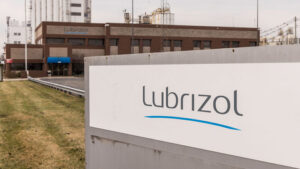
 Lubrizol announced the installation of an LED-driven photochemical chlorination reactor at its Louisville, Kentucky facility for production of chlorinated polyvinyl chloride (CPVC) resins. The company characterizes the change as a manufacturing upgrade intended to alter the chlorination step of CPVC synthesis through light-driven initiation rather than higher-temperature or conventional photochemical approaches, and reports associated changes in resin thermal stability, color performance and production throughput.
Technical details disclosed publicly are limited to process-level claims. Photochemical chlorination using LED sources typically involves delivering controlled photon flux to promote radical chain chlorination of PVC or related precursors, which can alter reaction kinetics, degree of chlorination, and side‑reaction profiles. In continuous-flow or batch reactors adapted for LED illumination, parameters such as wavelength, irradiance, residence time, temperature control, and mixing intensity can influence chlorine substitution patterns, molecular weight distribution and polymer chain scission rates. The press release links the LED approach to reduced thermal loading, extended run lengths and faster customer processing cycles; these outcomes may derive from reduced heat-driven degradation and tighter reaction control associated with photon-initiated radical chemistry.
From a manufacturing and materials standpoint, adopting LED chlorination at scale may entail reactor redesign, retrofitting of existing vessels with LED arrays, heat‑management systems and optically compatible windows or waveguides, as well as attention to materials compatibility for seals, linings and optics in a chlorinating environment. Process validation activities that may be required include molecular characterization (degree of chlorination, Mw and Mw/Mn), thermal stability testing (Tg, decomposition onset), colorimetry, and downstream processing trials to confirm extrusion, fusion and solvent resistance properties relevant to Polymers and Plastics applications. Utility and maintenance considerations for LED arrays, including service life under continuous operation and replacement schedules, may influence total cost of ownership and operational availability.
The announcement may be of interest to legal and regulatory practitioners for several reasons. Potential intellectual property considerations may include patents or trade secrets covering LED-based chlorination reactor designs, specific photochemical initiation protocols, or parameter sets that impact resin performance; freedom‑to‑operate analyses and licensing evaluations may be warranted. Changes in material properties and production processes may have implications for product qualification, conformity with industry standards (including ASTM and plumbing code specifications for CPVC piping), supplier notifications and change‑control documentation. Environmental, health and safety regulatory issues may arise in relation to emissions, effluent controls, photochemical safety, and handling of chlorinating agents or byproducts, which may be subject to agency permitting and workplace safety regulation.
For attorneys, patent professionals and regulatory compliance specialists, the Louisville installation may represent an operational case study in photochemical process adoption within commodity polymer manufacturing. The deployment may warrant monitoring for technical data releases, patent filings, regulatory filings or updated material specifications that may be relevant to procurement, qualification and dispute risk assessments.
Disclaimer: This article was generated or assisted by artificial intelligence and has been reviewed for accuracy; however, AI-generated content may contain errors or omissions. This article is provided by Innov8 Chem LLC and its subsidiaries for informational purposes only. The content herein does not constitute legal, technical, or professional advice and should not be relied upon as such. This publication is not intended to endorse, promote, disparage, or harm any company, product, or service mentioned. Readers should consult qualified legal and technical professionals before making any decisions based on the information presented. Innov8 Chem LLC and its subsidiaries disclaim all liability arising from the use of or reliance on this content.