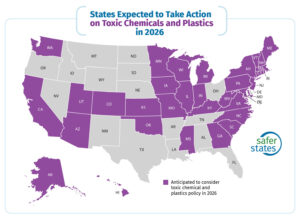
 The regulatory landscape for specialty chemistry and materials manufacturing is facing a significant shift as 15 major state laws and regulations are set to take effect in 2026. According to the “2026 Analysis of State Policy Addressing Toxic Chemicals and Plastics” released by Safer States, these mandates represent a transition from legislative adoption to active enforcement. The reporting indicates that 33 states are currently considering an additional 275 policies, suggesting a durable trend toward decentralized chemical oversight that frequently exceeds federal standards established under the Toxic Substances Control Act (TSCA).
A critical technical development in this regulatory wave is the transition toward class-based restrictions. Rather than monitoring individual CAS numbers, several states are implementing broad bans on entire chemical families, including bisphenols and phthalates. For patent professionals and regulatory specialists, this shift complicates the “substitution” strategy; replacing a restricted substance with a structural analog within the same functional class may no longer provide a viable compliance pathway. Furthermore, nine of the 15 policies taking effect specifically target “forever chemicals” (PFAS), requiring rigorous disclosure mandates and phase-outs in textiles, cosmetics, and furniture.
The implementation of these laws carries substantial implications for product liability and manufacturing specifications. As states impose first-in-the-nation bans on certain polymers and plastics additives, companies are compelled to undergo large-scale product reformulations. Because manufacturers rarely develop state-specific iterations of high-volume consumer goods, these individual state mandates effectively establish new national de facto standards for chemicals in supply chains. Legal practitioners should note that non-compliance or failure to adequately disclose the presence of regulated polymers could trigger consumer litigation or enforcement actions under state consumer protection statutes.
Furthermore, the intersection of state action and federal authority remains a point of contention. While some proposals in Congress seek to limit the Environmental Protection Agency’s (EPA) power to restrict substances and streamline safety reviews for new chemistry, state legislators are actively resisting preemption. Hundreds of state officials have advocated for the preservation of state authority to regulate beyond federal minimums. This creates a complex “patchwork” environment where legal departments must ensure that technical specifications meet the most stringent state requirement to maintain market access.
For legal professionals, these 2026 deadlines underscore the necessity of comprehensive supply chain audits and a proactive approach to materials science. The focus on “essential elements”—transparency, polluter accountability, and the identification of safer alternatives—suggests that future litigation may increasingly focus on the adequacy of alternative assessments and the historical disclosure of chemical constituents in industrial materials. As state-level enforcement begins, the burden of monitoring evolving chemical classifications will likely remain a primary concern for compliance counsel and intellectual property strategists.
This article was generated or assisted by artificial intelligence and has been reviewed for accuracy; however, AI-generated content may contain errors or omissions. This article is provided by Innov8 Chem LLC and its subsidiaries for informational purposes only. The content herein does not constitute legal, technical, or professional advice and should not be relied upon as such. This publication is not intended to endorse, promote, disparage, or harm any company, product, or service mentioned. Readers should consult qualified legal and technical professionals before making any decisions based on the information presented. Innov8 Chem LLC and its subsidiaries disclaim all liability arising from the use of or reliance on this content.