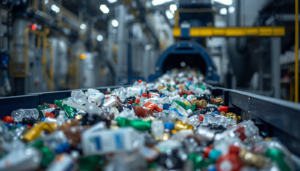
 Abundia Global Impact Group, a developer of waste-to-fuels facilities, announced a long-term supply arrangement with Frankfort Plastics to deliver 40,000 tonnes per annum of polyolefin plastic waste (POP) to Abundia’s first Cedar Port plant. The stated volume equates to roughly 50% of the expected feedstock requirement for the initial unit. Abundia described the commercial terms as binding while noting that more expansive definitive agreements are expected in the third quarter of 2026; the company is progressing site Phase 1 construction and project development activities toward a Final Investment Decision (FID).
The POP designation in the announcement indicates polymers primarily in the polyolefin family (commonly polyethylene and polypropylene), with Frankfort’s publicly described feedstock historically consisting of low-grade plastic film streams. Frankfort’s processing reportedly uses densification and custom preprocessing to convert contaminated or “hard-to-recycle” film into a consistent intermediate feedstock. For process engineers and materials specialists, key technical variables likely to affect downstream thermal or catalytic conversion processes include polymer composition, melt flow index, moisture content, inorganic fill (ash), halogen content (notably chlorine from PVC contamination), particle size distribution after densification, and residual contaminants (oils, organics, adhesives). Variability in these parameters may influence reactor feed handling, pre-treatment requirements, product yields, catalyst life, and final product quality metrics for downstream upgrading units.
On the conversion side, Abundia’s platform is described as producing “drop-in” fuels and low‑carbon chemical feedstocks; previously disclosed technology partners include a licensing reference to hydroprocessing/upgrading technologies. Feedstock quality and consistency may impact hydrogen consumption, catalyst selection and deactivation profiles, and final product compliance with industry specifications for transport fuels and chemical intermediates. Logistics and material handling considerations at Cedar Port—storage capacity, blending systems, conveyance, static mitigation, and fire protection—may also be consequential for operational permitting and insurance underwriting.
From a transactional and regulatory perspective, the reported deal structure may raise several contract drafting and compliance topics that could be addressed in the definitive agreements. These topics may include detailed feedstock specifications and sampling/acceptance protocols, warranty and indemnity regimes tied to contaminated loads, pricing and volume-flexibility mechanisms (including Abundia’s option to purchase additional volumes), force majeure allocation, and mechanisms for addressing feedstock nonconformance. Environmental permitting and transport rules at federal and state levels, emissions controls for thermal conversion and upgrading units, and waste classification for processing residues may be relevant to project timeline and operational conditions. Intellectual property elements may include proprietary preprocessing methods used by Frankfort, any licensed upgrading technology used by Abundia, and confidentiality or know‑how protections surrounding process integration.
For attorneys, patent professionals, and regulatory compliance specialists, the announcement may be of technical and contractual interest with respect to feedstock specification language, QA/QC regimes, IP and licensing overlaps, and environmental and safety permitting interfaces that may affect commercial execution and project risk allocation.
Disclaimer: This article was generated or assisted by artificial intelligence and has been reviewed for accuracy; however, AI-generated content may contain errors or omissions. This article is provided by Innov8 Chem LLC and its subsidiaries for informational purposes only. The content herein does not constitute legal, technical, or professional advice and should not be relied upon as such. This publication is not intended to endorse, promote, disparage, or harm any company, product, or service mentioned. Readers should consult qualified legal and technical professionals before making any decisions based on the information presented. Innov8 Chem LLC and its subsidiaries disclaim all liability arising from the use of or reliance on this content.